

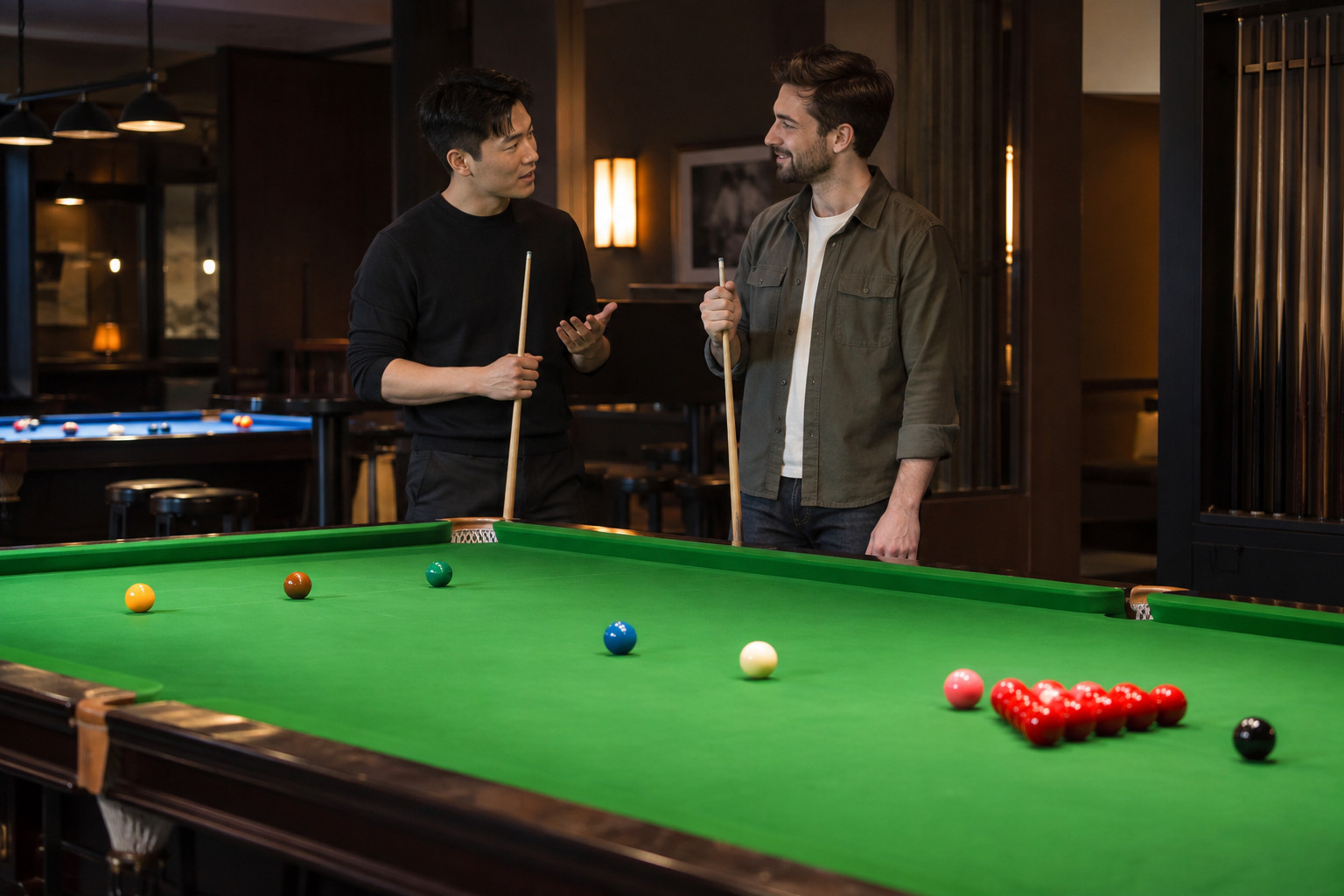
Snooker is played on a full-size table, 11 feet 8 and a half inches by 5 feet 10 inches, with twenty-two balls smaller than pool balls. Pool is played on seven-foot or nine-foot tables, with sixteen balls and a much shorter game. A frame of snooker between two casual players runs far longer than a game of pool, and it suits two people rather than a group. That is what decides which to book, and where to go for it.
Someone says snooker and everyone nods. Half are picturing the game on television. The other half mean the table down at the pub. They are not the same game, and booking the wrong one turns a good night into four people watching one person line up a long red.
What is the difference between pool and snooker?
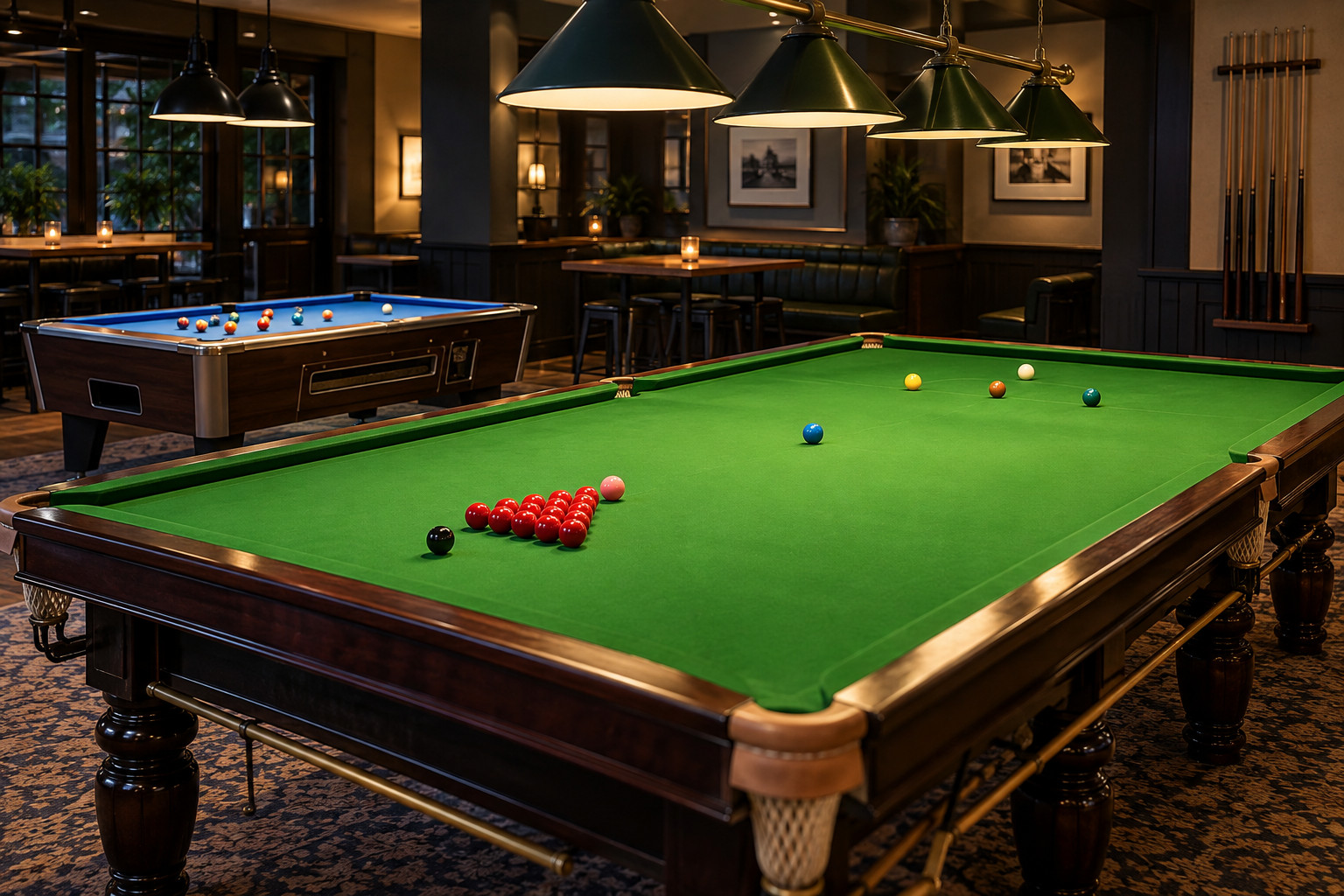
Snooker and pool share a cue and six pockets. The table, the balls and the scoring all differ.
A full-size snooker table has a playing area of 11 feet 8 and a half inches by 5 feet 10 inches, or 3,569 mm by 1,778 mm, measured inside the cushion faces. The rules allow half an inch either way. It stands 864 mm from the floor to the top of the cushion rail, and has six pockets: one at each corner and one in the middle of each long side. Everyone calls it a twelve-foot table, though those figures are the playing surface rather than the outside of the frame.
The biggest pool table in normal use is the nine-foot, with a playing area of 2.54 m by 1.27 m, or 100 inches by 50. A full-size snooker table is close to twice that area. Pub tables are usually seven-foot, smaller again.
The balls go the other way. A snooker set is twenty-two: fifteen reds, six colours (yellow, green, brown, blue, pink and black) and a white cue ball. Each is 52.5 mm across. A pool ball is 57.15 mm. So snooker gives you a far bigger table and smaller balls.
English billiards is a third game in the same rule book, played on a snooker table with three balls: a red, a white and a yellow. In Australia billiards also gets used loosely to mean pool, so ask which game somebody means.
Is snooker harder than pool?
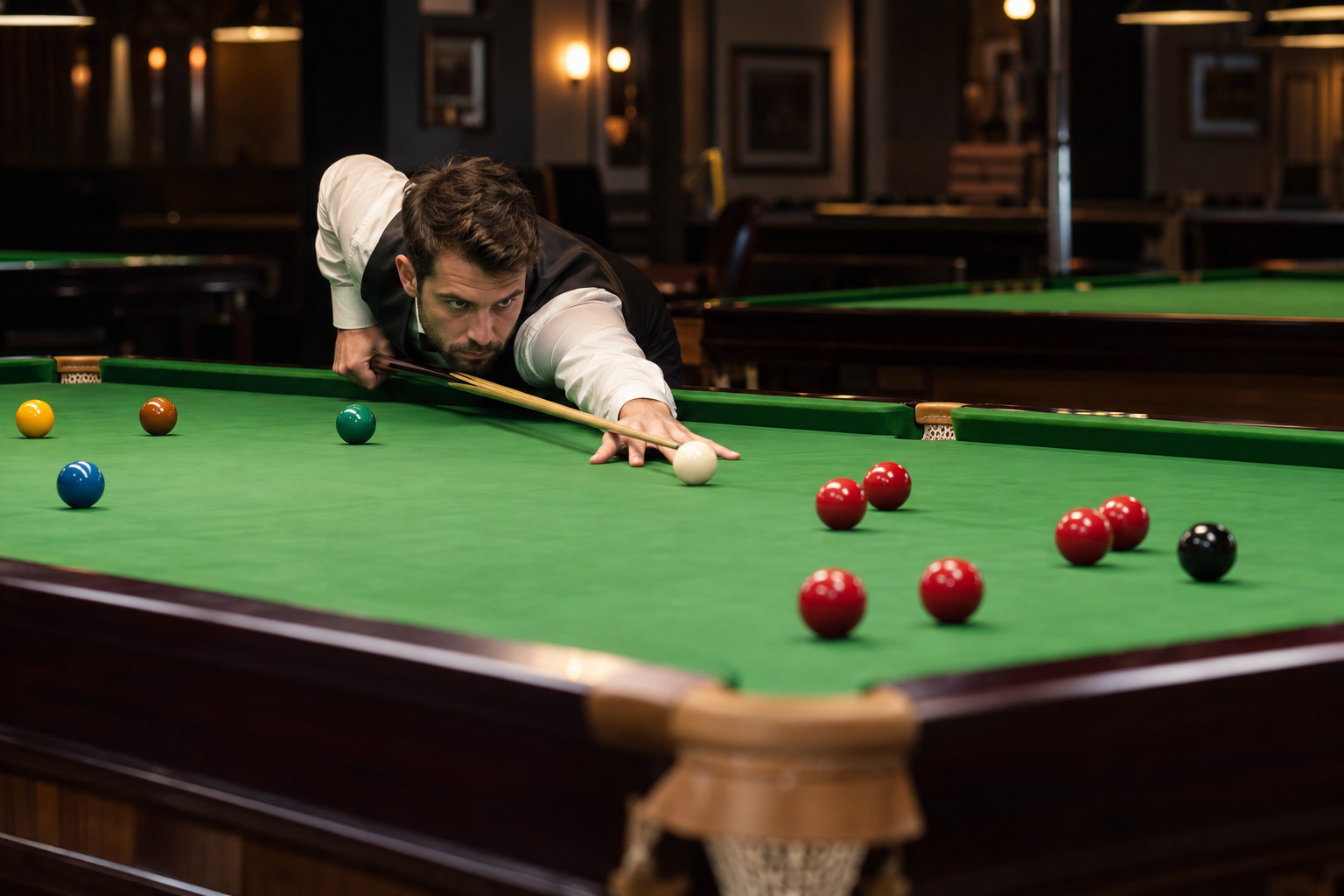
Yes, and the reason is in the numbers, not in anyone’s opinion. A pot that is routine on a seven-foot table becomes a long, thin cut on a full-size one, and every error in your cue action has further to travel before the ball drops.
Then there is the sequence. Snooker has twenty-one object balls. You pot a red, then a colour, then another red, and each colour returns to its spot while reds remain. Once the reds are gone, the colours are potted in order of value and stay off. Reds are worth 1, then yellow 2, green 3, brown 4, blue 5, pink 6 and black 7.
Fouls cost more as well. A foul carries a minimum of four penalty points, and a higher-value foul is worth the value of the ball involved. They go to your opponent rather than off your own score. In pub pool a foul costs a shot; in snooker it moves the scoreboard.
Then there is the tactic the game is named after. Your opponent has to hit a particular ball. Leave the cue ball so that another ball blocks the straight line to it, and they cannot strike it directly. That is a snooker, and good players set them up on purpose. It is why a frame can run minutes without a pot and still be worth watching.
None of this makes snooker a bad first game, just one worth an hour of instruction before you decide you are no good at it. Venues that keep a full-size table often offer coaching, and a session on stance, bridge and cue action changes how it feels.
How long does a frame of snooker take?
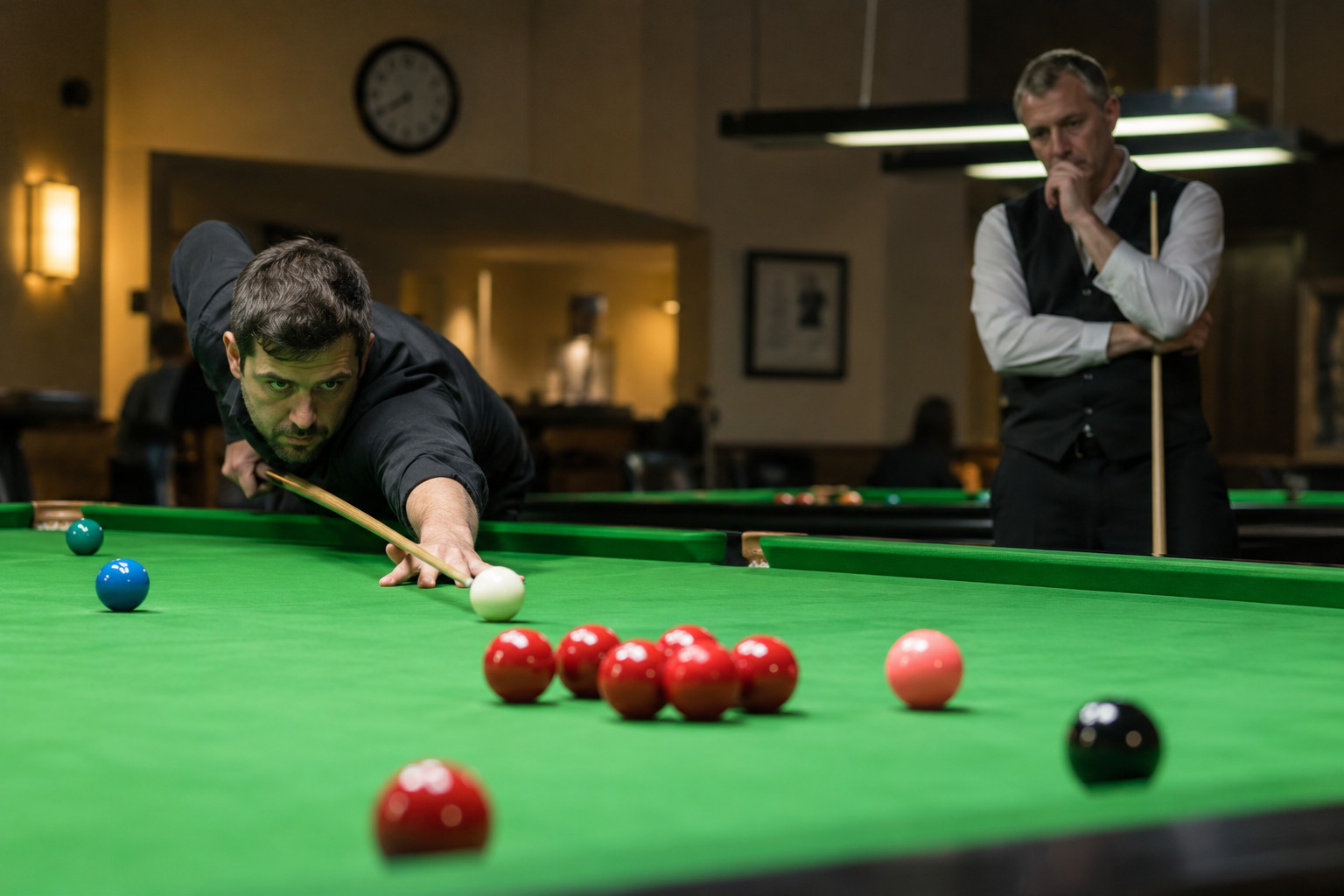
Longer than you expect, and the governing body’s own rule book is the clearest evidence of that.
The rules put no time limit on an ordinary frame. They do carry a separate short format, the Snooker Shoot Out, which caps the whole match at ten minutes and runs a shot clock: 15 seconds a stroke for the first five minutes, 10 seconds for the last five. A format built to make snooker quick needs both clocks to do it.
The same rule book carries Six Reds Snooker as a recognised variation. It is the same game with nine fewer reds. A governing body does not publish a shortened version of a game that was already short.
A frame is between two players, or two sides of two. The rules cover a four-handed game, where four players form two pairs and each side starts alternate frames. Anybody past that is watching.
So apply that to your evening. Two people who play now and then will be on the table a long while for one frame. Six will spend most of the night sitting down. That is not a criticism. It is what snooker is.
Where can you play snooker in Sydney?
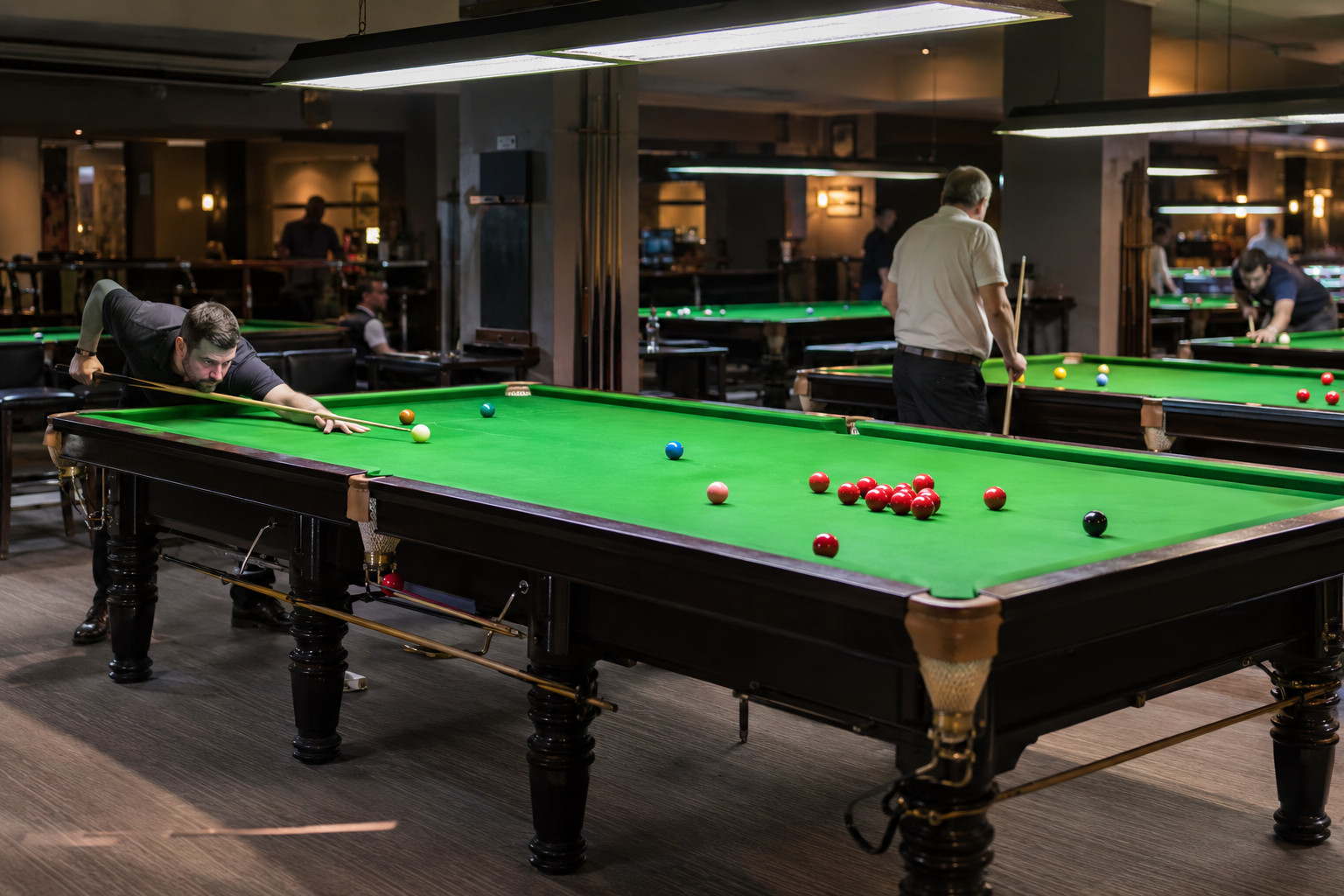
Full-size snooker tables are not common in Sydney, so one has to be found rather than assumed. Three kinds of venue keep them, and they suit different groups.
Dedicated snooker halls hold several full-size tables. If snooker is specifically what you came for, this is the right answer: a group can take two or three tables and everybody plays.
Clubs with a table or two are the next tier. Leagues and regulars often have them booked out, so ring rather than drive.
Cue sports venues that are pool-led are the third kind. They are built around pool, with snooker on a full-size table alongside it. Club9 in the Bakehouse Quarter at North Strathfield works that way, and its snooker page sets out the table, the cloth and the balls in use. North Strathfield Station is a three-minute walk, and parking in the Bakehouse District is free for two hours.
Be honest about your group before you choose. A venue with a single full-size table is right for two players and wrong for eight. If snooker is the point of the night and there are six of you, a hall with several tables is the better booking. Smaller snooker tables are common in homes and clubs, so full-size is worth asking about.
When is pool the better booking?

For a group, pool is almost always the better answer. It is a shorter game on a smaller table, and it is built for people to rotate through.
A game of eight-ball on a seven-foot table finishes quickly enough that nobody waits long for a turn. Four can play doubles. Six can play winner stays on. The table becomes the centre of the evening rather than something to queue for.
Mixed ability is the second reason, and it matters more than it sounds. Pool’s bigger balls and smaller table mean a beginner pots something in their first game. Someone who pots nothing for forty minutes stops enjoying themselves, and a full-size table makes that a real risk.
The third reason is conversation. Pool is a game you can talk over. Snooker rewards concentration and safety play, so a group chatting behind a player lining up a long pot makes for a strained evening. If the night is mainly about catching up, pool lets you do both.
Session length is the fourth reason. An hour of pool holds several games. An hour of snooker is one frame and a bit, sometimes less. If you have a table booked between dinner and something else, pool fits the gap and snooker does not.
The last reason is one people notice only afterwards. A pool table gives everyone something to do with their hands, which is what makes it work for a group who do not all know each other. Snooker turns the room into an audience. Both are good evenings. They are not the same evening.
Which room suits your group is a separate question, answered more fully in our guide on where to play pool in Sydney.
Do you need to know the rules before you turn up?
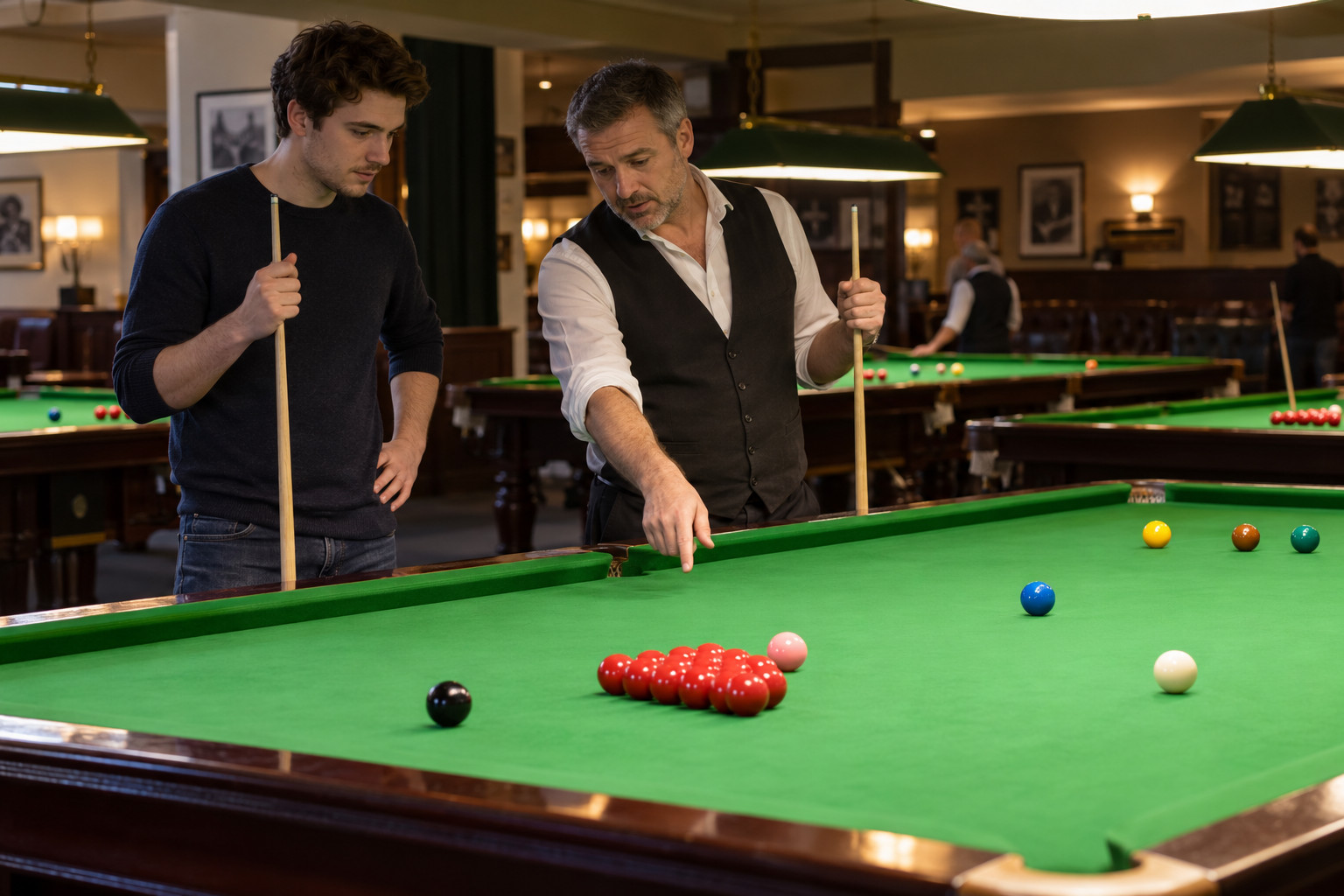
No. Three things are enough to start a frame.
That is enough to play without embarrassment. The rest you pick up in the first twenty minutes.
- Reds and colours alternate. Pot a red, then a colour, then another red, and the colours keep returning to their spots while reds remain.
- When the reds are gone, the colours are potted from the lowest value up to the highest, and they stay off the table.
- A foul hands your opponent at least four points. Hitting the wrong ball first, potting the wrong ball and potting the white all count.
Two practical things before you go. Ring ahead if snooker is what you came for: a venue with a full-size table can have it occupied all evening, and you will not know until you arrive. And if there are more than two of you, book a pool table instead. Ask on the same call how many people one table allows: some venues cap it at four outside leagues and official events, so six need two tables. Expect to sign in at the front desk when you arrive, even as a walk-in. If you are weighing it up, get in touch and say how many of you there are.
Frequently asked questions
What size is a full-size snooker table?
Full-size means the dimensions the rules set, not simply a table that looks large: a playing surface of 3,569 mm by 1,778 mm, with half an inch of tolerance, and a cushion rail 864 mm off the floor. Tables sold for homes and clubs are often smaller, so the phrase is worth checking.
Can you play snooker on a pool table?
Not the full game. Twenty-one object balls in a fixed sequence need a surface close to twice the area of the biggest pool table, and the two ball sets are different sizes, so they do not mix. A small snooker table is the usual compromise at home.
Is billiards the same as snooker?
No. English billiards is its own game, played on the same table with only three balls, though one rule book covers both. In Australia the word is also used loosely for pool, so ask which game and which table before you book.
How many people can play a frame of snooker?
Two, or two sides of two. The rules allow a four-handed game in which four players form two pairs and start alternate frames. Anyone past that is a spectator, which is the limit that matters for a group.