

Choose a first pool cue by comparing how it feels in your hands: its weight, balance, grip and shaft. Check the exact model before buying a different shaft later. You can keep using a house cue if that suits how often you play. Owning one does not promise better results.
Do you need your own pool cue?
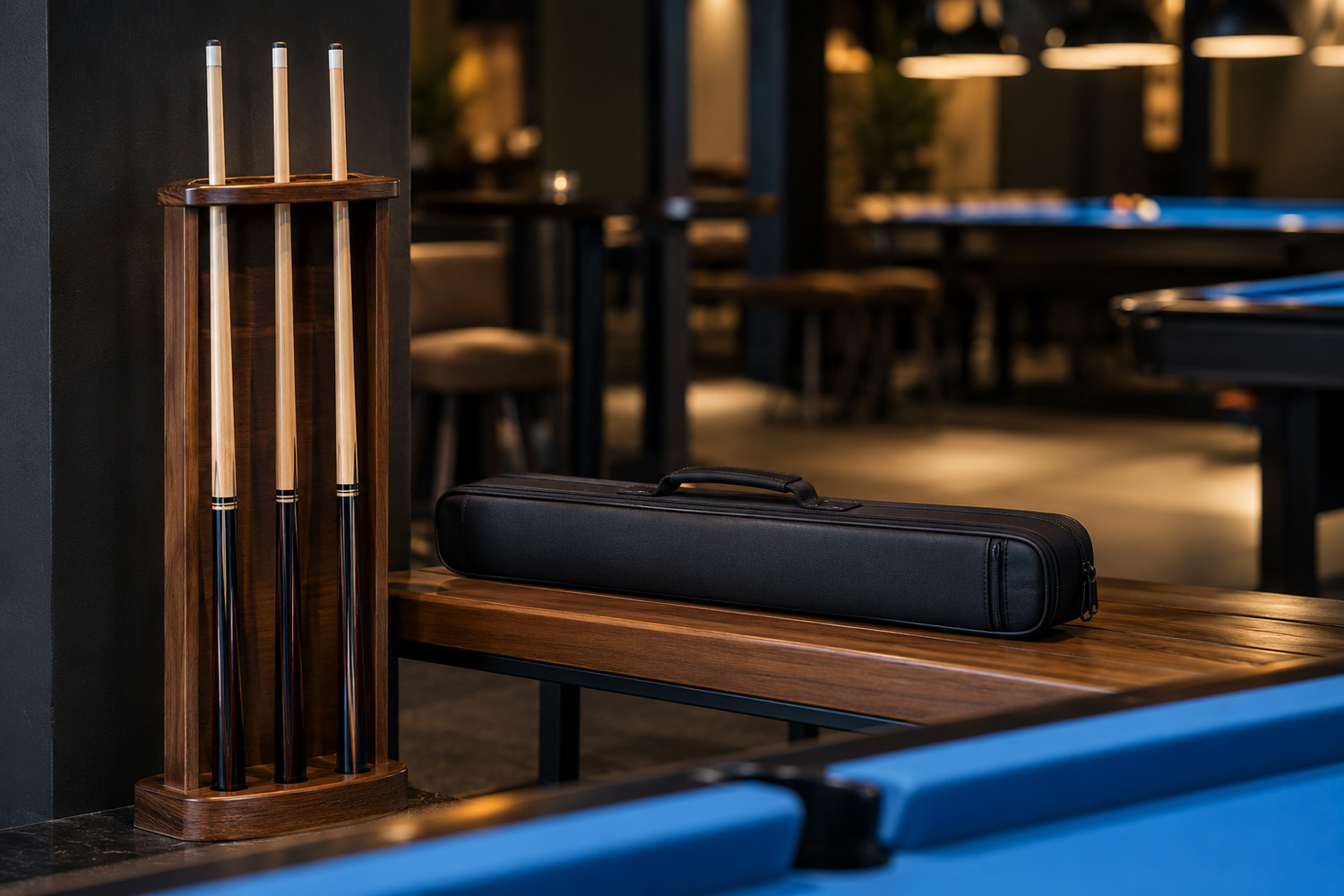
A personal cue lets you choose equipment you can bring back each visit. That can be useful when you play regularly, but buying one is optional. Club9’s guide to a first pool-hall visit explains the supplied-equipment option for social players.
Your own cue still needs care, and its tip and grip can wear. Nor does the purchase replace learning. Instructor Dr Dave Alciatore recommends focused practice on trouble areas and sound fundamentals in his advice on improving at pool.
When browsing, look for an ordinary playing cue. Manufacturers also sell specialist break cues and jump cues. You do not need to turn a first playing-cue purchase into a bundle of specialist equipment.
How should a cue feel in your hands?
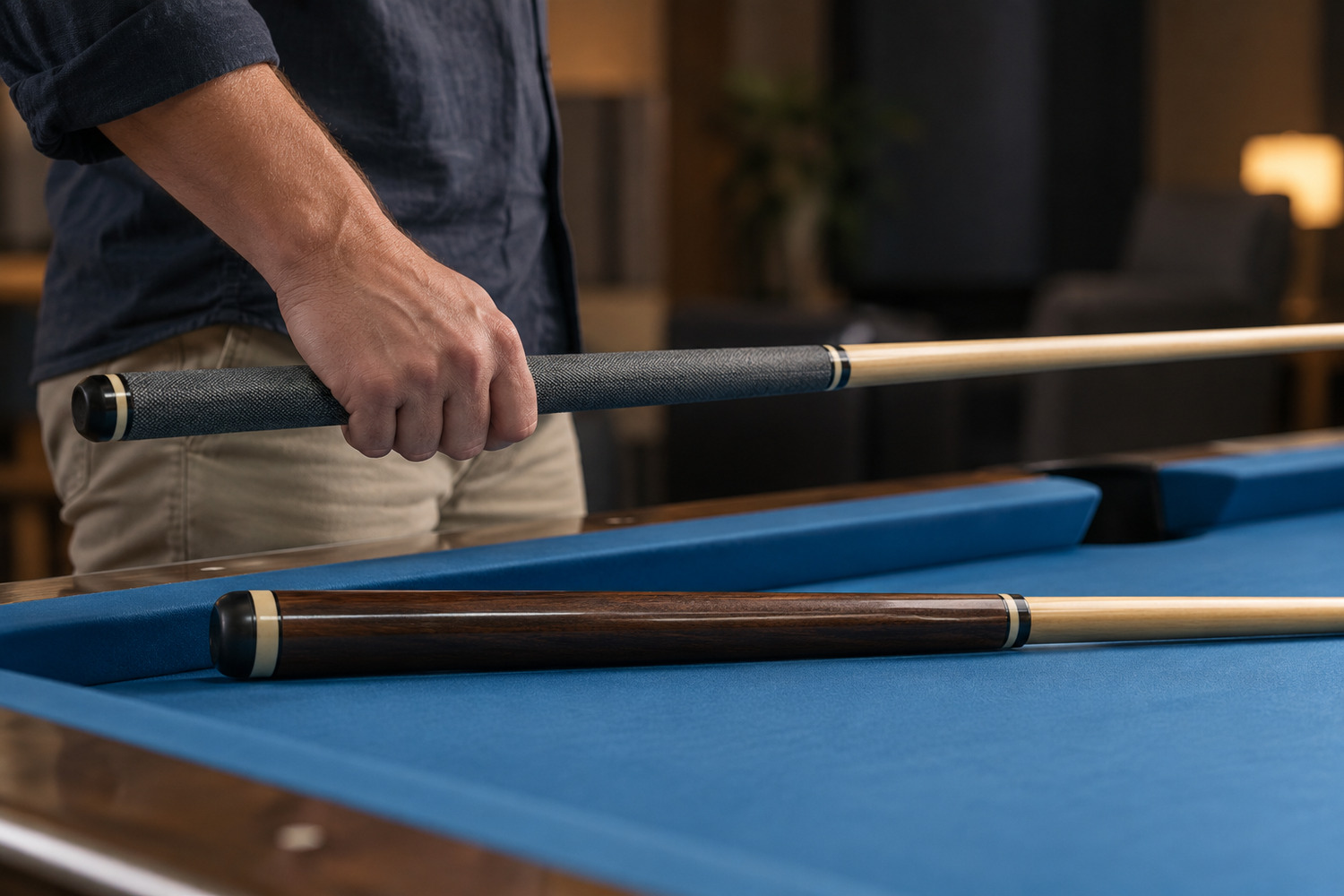
Weight and balance are different. Weight tells you how heavy the whole cue is. Balance concerns how that weight is distributed along it. Two cues with the same weight on the label may feel different when you hold them.
Compare them in your usual playing position rather than choosing from the label alone. Notice whether either feels awkward to support or move. There is no need to adopt somebody else’s preferred weight as your own.
The grip is the area under your back hand. Cue descriptions may refer to a wrap, such as linen or leather, or an unwrapped finish. Feel the actual surface if you can. A finish you like to look at may be less comfortable in your hand.
Keep these checks separate:
- Weight: can you handle the cue comfortably through an ordinary shot?
- Balance: does the cue feel comfortable in your normal hold?
- Grip: do you like the surface under your back hand?
Treat any claim about adjustable weight or a changeable wrap as a feature to check for that model. Do not assume every cue can be changed after purchase.
What are the shaft, the tip and the joint?
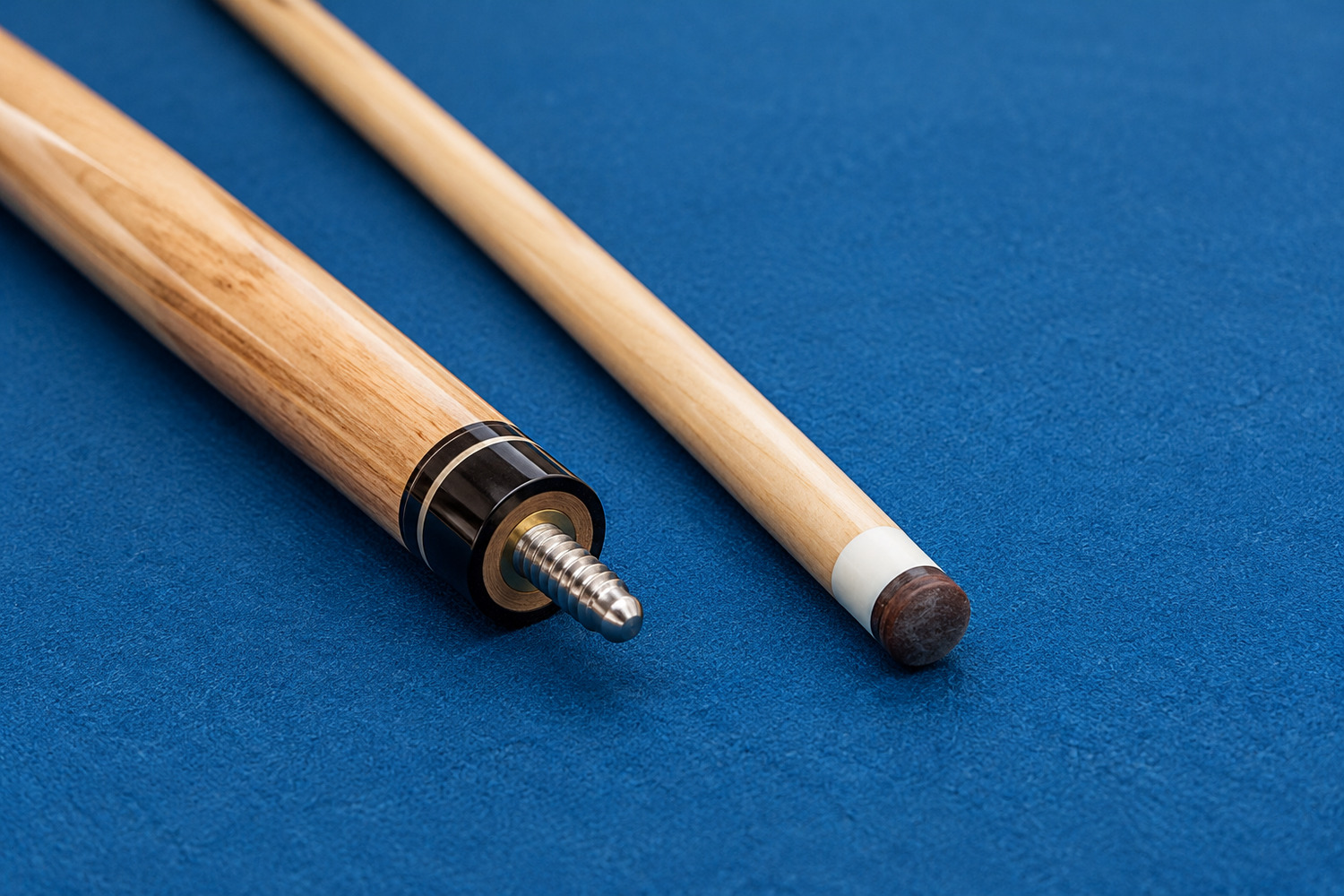
The shaft is the narrower front section that moves over your bridge hand, the hand supporting the cue near the table. The tip is the small pad at the end that contacts the cue ball. On a two-piece cue, the joint connects the shaft to the thicker rear section, called the butt.
Shaft descriptions commonly name materials such as maple or carbon fibre. Tips may be described as soft, medium or hard. Those labels help identify a product; they do not establish that it will make a beginner more accurate. Compare the cue itself rather than buying a promised result.
Compatibility needs a separate check. Predator’s joint guide lists different connections, including several used within one brand. A familiar brand name or a similar-looking connection is not enough to establish that a replacement shaft fits. Use the exact cue and shaft documentation, including the manufacturer’s fit requirements.
How can you compare two cues fairly?
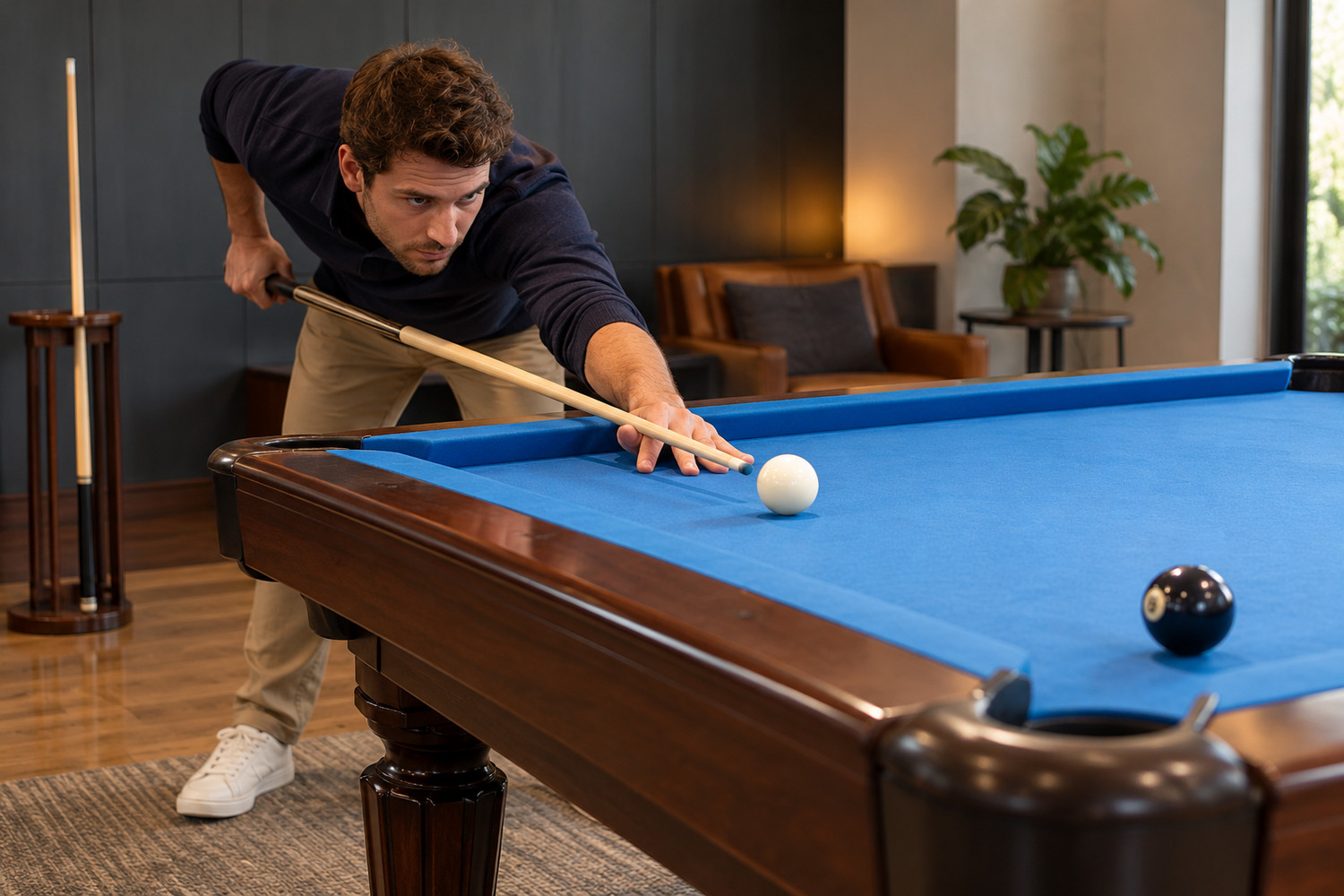
Try an ordinary straight shot you are comfortable playing. Keep the table and ball layout the same while you change cues. You can then compare the feel without also changing to a different shot or table.
Play at a gentle pace and at your normal pace. Notice the grip, the weight in your back hand and how the shaft feels over your bridge. You are choosing equipment you feel comfortable using, rather than proving which cue produces the most pots.
A missed shot does not establish a fault in the cue, and a successful one does not prove that buying it will improve your game. Use the comparison to notice what feels comfortable.
A try-before-you-buy rental service at Club9’s Pro Shop in North Strathfield lets players test equipment before purchasing. Ask what is available when you visit.
What else do you need besides the cue?
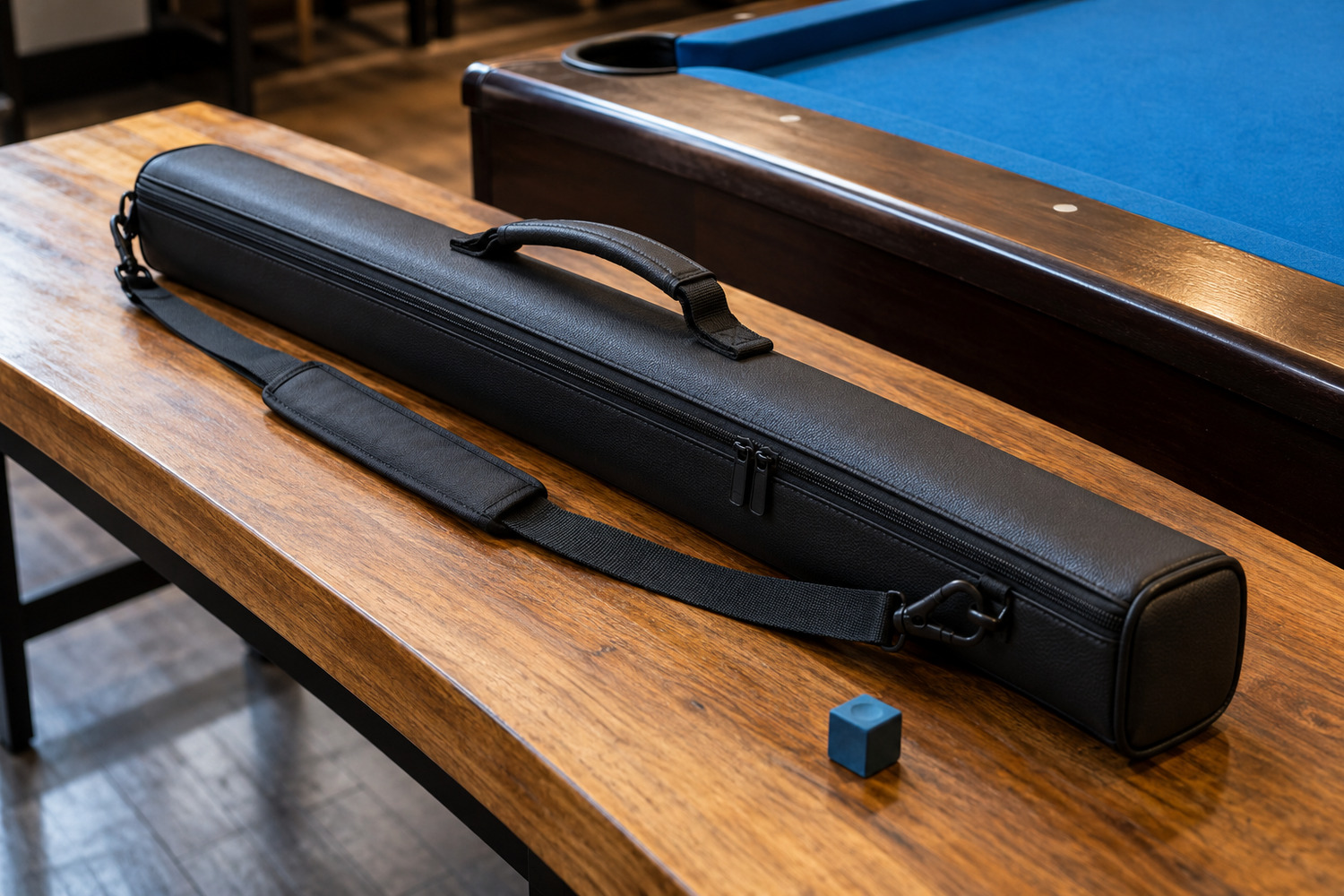
Consider how you will carry and store it. A case should suit the cue’s size and give it appropriate protection in transit. Compare the actual case construction and fit rather than assuming that every hard case protects equally or every soft case weighs less.
Read the cue’s own care directions and warranty terms before buying. Check what the seller supplies with that product, what care it needs and how a warranty claim is handled. One manufacturer’s general description is not a guarantee for another cue.
You can make this a modest equipment choice. There is no need to add accessories you do not yet have a use for, or to pay for a feature solely because a more experienced player likes it.
Which choice suits how often you play?

If you play occasionally and are happy with supplied equipment, keeping that arrangement is a reasonable choice. If you play regularly and want a cue of your own, compare ordinary playing cues before committing to one. Playing frequency is also one of the questions in Predator’s buying guide.
Club9 sells cues at the venue. You can try equipment through the rental service while deciding whether you want to buy.
A lesson with a coach serves a different purpose: help with technique. Club9 offers individual and group lessons, along with demo equipment. Buying equipment and seeking instruction are separate choices; choose the one that answers your present need.
Frequently asked questions
What weight pool cue should a beginner use?
Start with a weight you can handle comfortably in your normal playing position. If you later want to change it, first check whether that exact model allows adjustment and follow its manufacturer’s instructions.
Can you put any shaft on any pool cue?
No. Check the exact cue and replacement shaft, not just the brand or a connection that looks similar. The manufacturer’s compatibility information needs to cover the intended combination.